A Note on Process
The evaluations in this report are not the product of a single season or a single dataset. They are informed by years of live viewings, travel, and repeated exposure to the NBA G League and its predecessors.
Long before the league became a widely accepted development tool, Hoop Obsession was tracking how NBA teams used it, and which types of players consistently translated.
Over the years, that work has included on-site evaluation of players such as Rudy Gobert, Kris Dunn, Gary Payton II, and others during their developmental stages, as well as early notes on prospects from Dyson Daniels, to Norchad Omier, well before their respective drafts.
The song has remained the same: evaluate roles, efficiency, and competitive behavior, not just outcomes.
D-League/G-League Tweets from Bobby Gerould over the years:
Dec 15, 2010
“It might not be popular but several #NBA teams have LOTTERY picks that really should be in the D-League more than they should be in NBA now.”Feb 20, 2013
“The owners in Oakland have the #Warriors set up in Santa Cruz with their own D-League Team. It is the way of the future in the #NBA.”Jan 8, 2016
“The level of play in the D-League is impressive. Understand I'm coming from the perspective of having seen where the level once was.”
Nov 11, 2018
“I want to publicly applaud the Sacramento Kings for having Harry Giles play in Stockton… I saw Rudy Gobert play in Reno at the Showcase years ago. Saw Clint Capela in Santa Cruz. The G-League is a useful tool.”
2025–26 Hoop Obsession G League Report
(January 16, 2026) – By Bobby Gerould. Each season, HoopObsession.com takes a grounded, present-tense look at the NBA G League with the goal of identifying players whose games translate beyond the box score. This report reflects where players stand right now, informed by full-game viewings and supported by data rather than driven by it. The approach is simple: efficiency-based evaluation guided by common-sense principles. We focus on how players function within real roles, how they sustain impact across possessions, and whether their contributions hold up inside team structure. This work has been ongoing for well over a decade, dating back to our early attendance at what was then called the D-League in 2010.
For this report, we’ve selected 18 G League prospects who distinguished themselves through a combination of production, efficiency, and defensive reliability. Understand we are not seeking future NBA All-Stars here. G-League call-ups are almost entirely supporting actors. These are players who can process the game, and consistently impact winning possessions. We start with the five players we feel are the best prospects in the G. Beyond that, players are presented in alphabetical order, allowing the focus to remain on each player’s individual profile rather than perceived hierarchy.
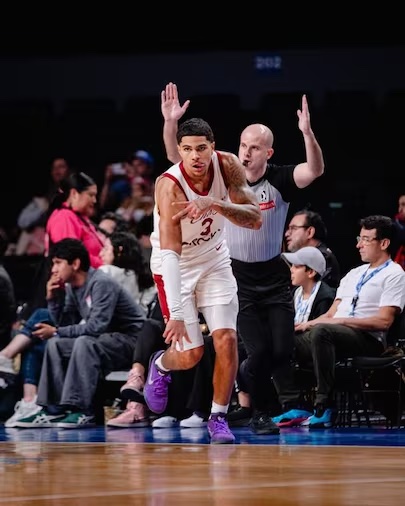
Killian Hayes — Cleveland Charge
Age: 24
Current NBA status: Unrestricted Free Agent.
Of the 18 prospects highlighted in this report, Killian Hayes is the one NBA teams should be reconsidering most seriously. Once evaluated through the narrow lens of expectation and draft position, Hayes’ recent G League work benefits from a reset in context. At this stage of his career, he’s no longer being asked to project, he’s being asked to function. And functionally, his game has taken a meaningful step forward.
Hayes is averaging 27.8 points, and 10.0 assists per game!
Offensively, Hayes has been far more efficient than earlier chapters of his career suggested. He’s shooting the ball better from the floor (45.9% FG), and he remains a natural passer who sees plays early. Importantly, he’s no longer forcing outcomes. His reads are cleaner, his pace is more controlled, and his shot selection reflects a player who understands what he does well and where he helps the group.
His three-ball is still somewhat inconsistent but in the last two seasons in the G-League, he’s shot a respectable 34.9% from downtown.
Defensively, Hayes continues to bring value. His size for the Point Guard position (6'5"), instincts, and willingness to compete would be welcomed on any team. His (Defensive Differential: +2.8) indicates that his teams have defended better with him on the floor, not an insignificant note for a guard tasked with initiating offense.
Hayes’ trajectory now reads differently than it did early in his NBA career. The skill set is still intact, but it’s paired with greater efficiency, improved feel, and a clearer understanding of role. Viewed strictly through recent performance and context, not reputation, Hayes looks like a guard who can help an NBA team, especially one seeking size, playmaking, and defensive reliability at the position. Among this group, he stands out as the prospect most deserving of a second, unbiased look.
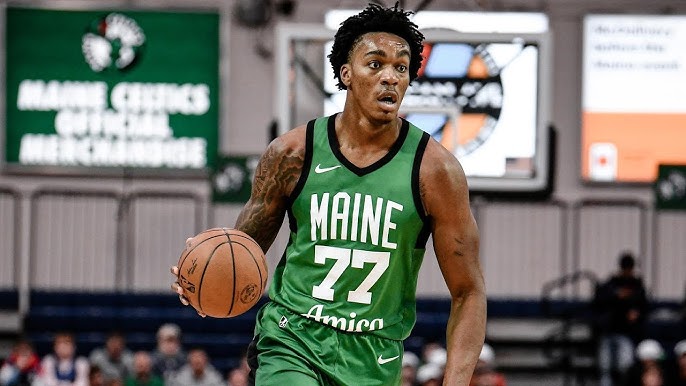
Amari Williams — Maine Celtics
Age: 23
Current NBA status: Under Two-Way Contract (Boston Celtics)
Amari Williams has established himself as a functional, two-way center whose value is rooted in efficiency, feel, and consistency. At 6’10” with strength and balance, he plays a composed interior game. Williams does not rely on athletic excess or shot creation to matter; instead, his impact comes from doing the foundational work well and repeatedly.
Offensively, Williams has been highly efficient within role. During the 2025–26 G League season with Maine, he is averaging 14.7 points per game, shooting an excellent 61.8% from the field. Nearly all of his offense comes from finishes at the rim, second-chance opportunities, and quick decisions when defenses rotate. He doesn’t force touches, and he doesn’t stall possessions, which allows his scoring to remain additive rather than disruptive.
Williams’ all-around contribution stands out when looking beyond scoring. He averages over 11 rebounds per game, including a strong share on the offensive glass, and adds 4.3 assists per game, an indicator of his feel and willingness to move the ball from the interior. He also provides rim presence, averaging 1.8 blocks per game, consistently finishing defensive possessions rather than merely contesting shots.
Defensively, Williams has been a clear positive. He communicates, rebounds his area, and doesn’t require schematic protection.
Williams’ two-way contract with Boston reflects a developmental big who already understands role and responsibility. When efficiency, rebounding, passing feel, and defensive reliability are weighed together, Williams looks like a center whose game translates because it supports team structure and consistently produces winning possessions.
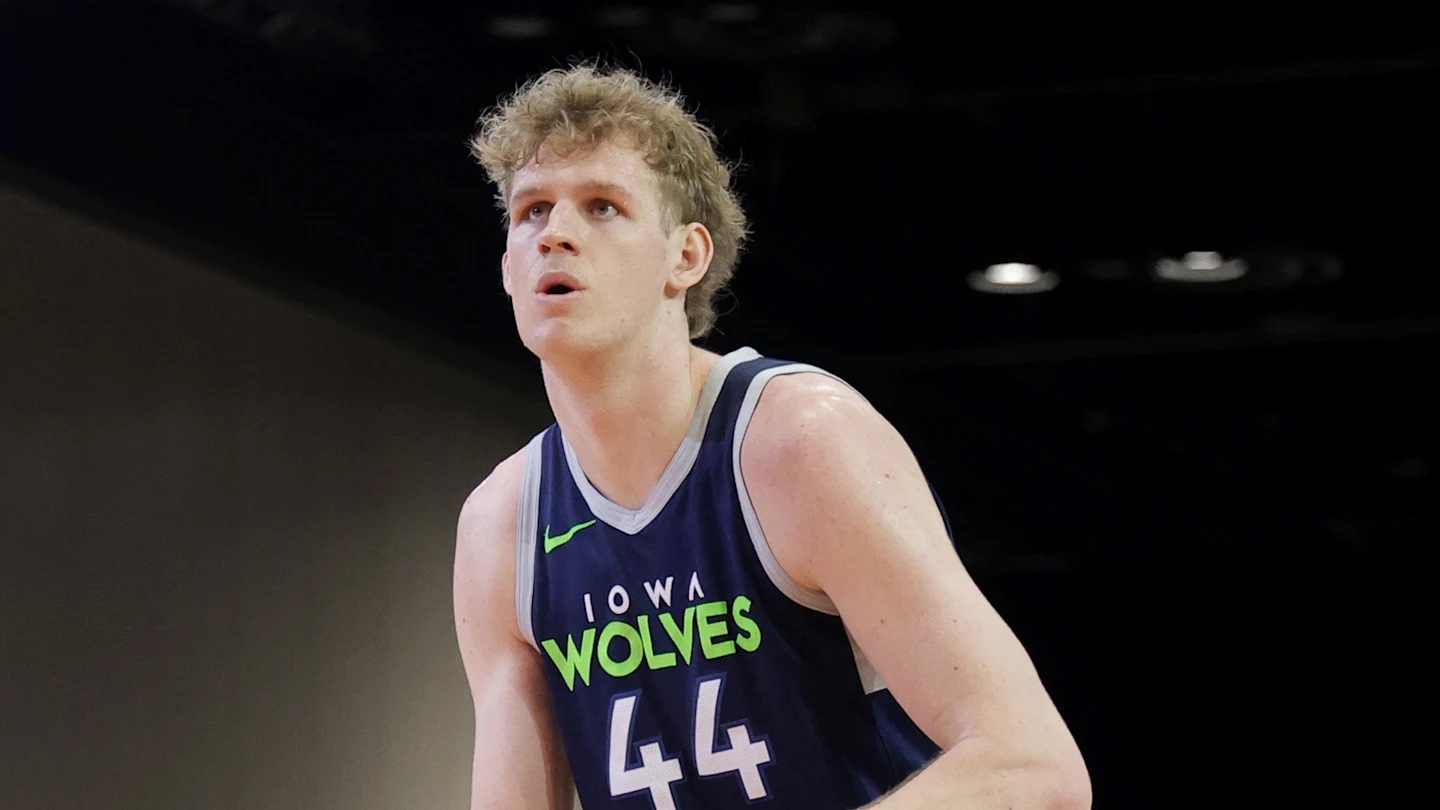
Rocco Zikarsky — Iowa Wolves
Age: 19
Current NBA status: Under Two-Way Contract (Minnesota Timberwolves)
Rocco Zikarsky is one of the youngest prospects in this report, but his impact has already been tangible. At 7’3” with legitimate size and reach, he provides a physical profile that immediately changes how opponents attack the paint. Despite his age, Zikarsky has shown poise and restraint, playing within himself and understanding how to function inside team structure rather than chasing production.
During the 2025–26 G League season, he averages 13.1 points per game while shooting 54.2% from the field. His scoring comes from finishes around the rim, rolls out of ball screens, and second-chance opportunities. While he has shown flashes of touch extending beyond the paint, he does not force attempts outside his role, which keeps his efficiency intact.
Zikarsky’s rim presence stands out. He averages nearly two blocks per contest, consistently impacting possessions even when not directly involved in the play. His timing as a shot blocker continues to improve, and he’s shown a willingness to challenge vertically without overcommitting or chasing blocks.
His Defensive Differential (DDiff: +6.2) indicates Iowa defended at a significantly higher level with him on the floor. His size deters attempts at the rim, alters shot selection, and allows teammates to stay home on shooters. For a 19-year-old big, the combination of discipline and defensive influence is notable.
Zikarsky’s two-way contract with Minnesota reflects a long-term developmental view. While he remains a work in progress offensively, his size, efficiency, and defensive impact provide a clear foundation. At this stage, Zikarsky looks like a center whose value has room to grow as strength, experience, and feel continue to develop.
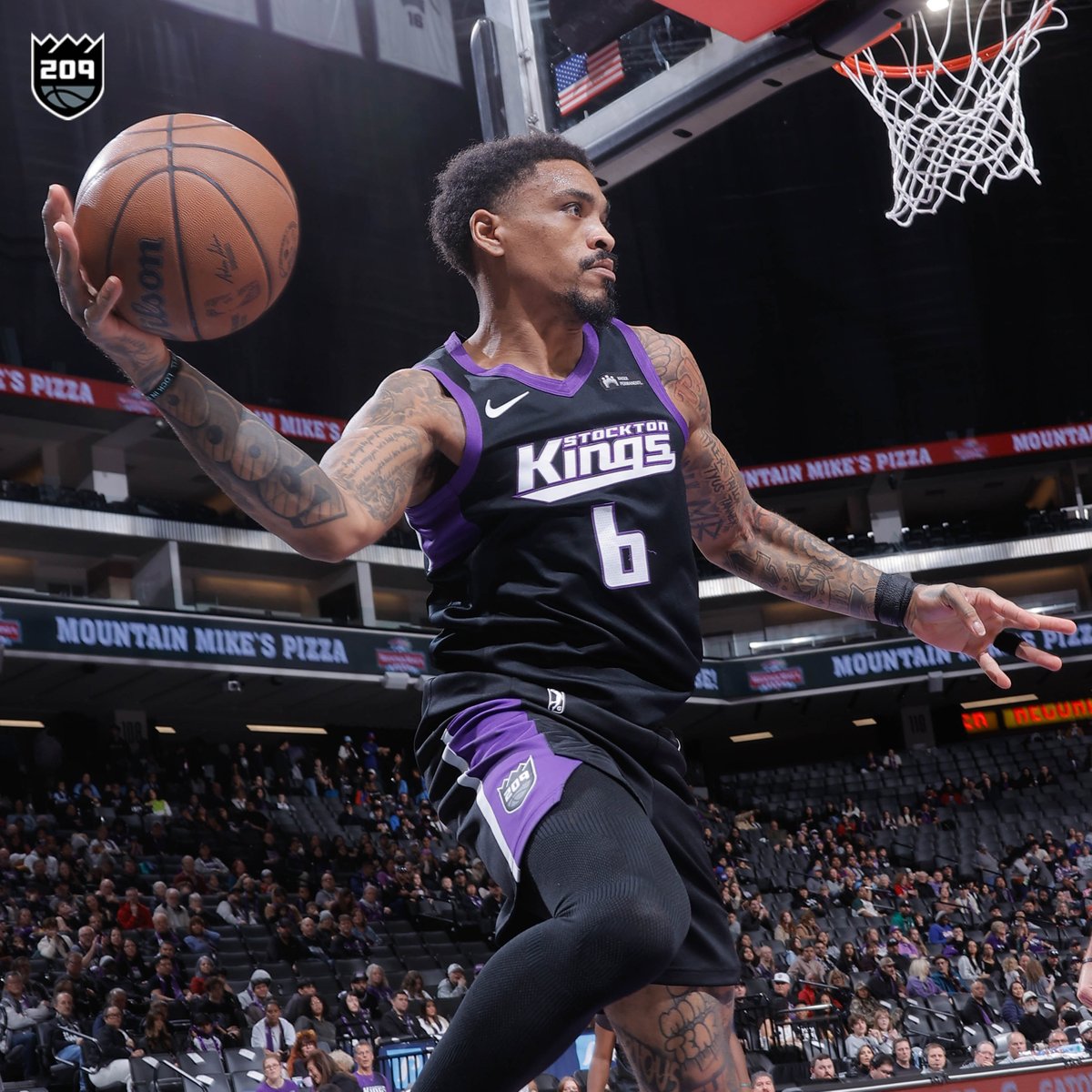
DaQuan Jeffries — Stockton Kings
Age: 28
Current NBA status: Unrestricted free agent.DaQuan Jeffries profiles as a true wing defender whose impact is better understood through function than listing. Though measured at 6’5”, he plays the position with the physical profile of a small forward, aided by a reported 6’11” wingspan. That length shows up consistently and is reflected in his ability to handle larger matchups while staying active defensively.
Offensively, Jeffries has been efficient and selective. This season with Stockton, he averages 15.4 points per game while shooting 49.1% from the field and 42.9% from three, numbers that underscore his ability to punish defenses without requiring volume. He finishes plays decisively, attacks closeouts, and doesn’t stall possessions trying to create beyond his role.
Defensively, Jeffries has been a clear positive. His Defensive Differential (DDiff: +7.4) indicates Stockton has defended at a dramatically higher level with him on the floor. He consistently finishes defensive possessions, averaging nearly six rebounds per game from the wing.
Jeffries’ professional path to date reflects role acceptance and refinement. He doesn’t need offensive prioritization to matter and doesn’t give back value defensively. When you combine his efficiency, length, and defensive reliability, the profile holds up possession by possession, which is ultimately what translates.
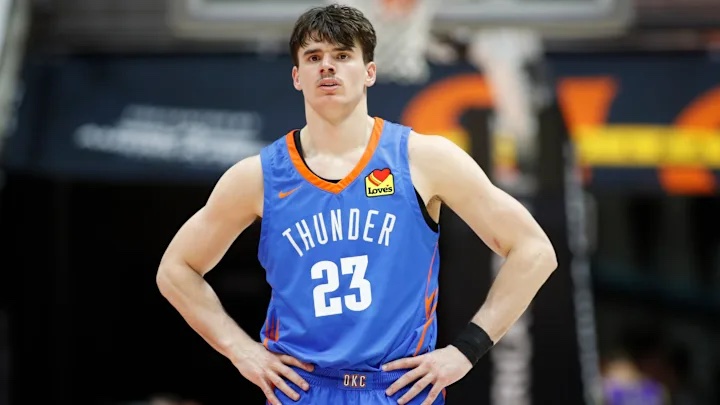
Brooks Barnhizer — Oklahoma City Blue
Age: 23
Current NBA Status: Under Two-Way Contract (Oklahoma City Thunder)
Brooks Barnhizer has been one of the most impactful defensive guards in the G League this season. Even when his offensive usage isn’t high, his presence is felt because he consistently affects possessions without needing plays called for him. He plays with physical engagement, awareness, and urgency, and he’s comfortable doing the work that keeps team defense intact.
Offensively, Barnhizer stays within himself and keeps possessions moving. He’s converting efficiently when opportunities present themselves and has shown he can punish defenses that leave him space. He doesn’t hijack the offense, he doesn’t need rhythm dribbles to contribute, and his decision-making tends to support the group rather than slow it down.
Defensively, the impact has been overwhelming. Barnhizer’s DDiff of +9.9 indicates Oklahoma City has defended at a dramatically higher level with him on the floor. He is disruptive at the point-of-attack, competitive as a rebounder, and consistent with second efforts that flip possessions. He competes through contact and plays like someone who expects to win the possession.
Barnhizer’s profile fits the kind of player coaches trust: defensively reliable, role-aware, and efficient enough to stay playable. With his defensive impact reaching rare levels for a guard, he’s not just “hanging in the league”, he’s shaping outcomes when he’s on the floor.
Warith Alatishe — Cleveland Charge
Age: 25
Current NBA Status: Unrestricted Free Agent
Classification: LPS (Low-Percentage Shooter)
Warith Alatishe has carved out a clear identity as a defense-first forward whose value shows up consistently. At 6’7” with strength and length, he defends multiple frontcourt and wing matchups without compromising team structure. While perimeter shooting is his weakness, his impact remains positive because he does not force offense or bleed efficiency.
Alatishe’s offensive contributions come through high-percentage finishing (he’s presently at 70.6% FG!), offensive rebounding, and simple reads. He plays within the flow, converts around the rim, and keeps possessions alive. That restraint matters. For low-percentage shooters to stay playable, they must compensate elsewhere, and Alatishe does so with physicality, effort, and consistency. His usage stays aligned with what he does well.
Defensively, Alatishe is one of the more impactful forwards in the G League this season. His Defensive Differential (DDiff) of +4.6 reflects real on-court influence rather than isolated events. The Cleveland Charge defended at a meaningfully higher level with him on the floor, which tracks with what the tape shows: active hands, strong positioning, and an ability to contest without fouling. He competes on every possession and rarely needs to be protected.
Alatishe’s path, undrafted, moving through multiple G League environments, mirrors that of many players who eventually stick because they understand role and responsibility. He is not flashy, but he is dependable. As an LPS forward who defends, rebounds, and plays efficiently within team concepts, Alatishe fits the profile of a player who can be trusted.
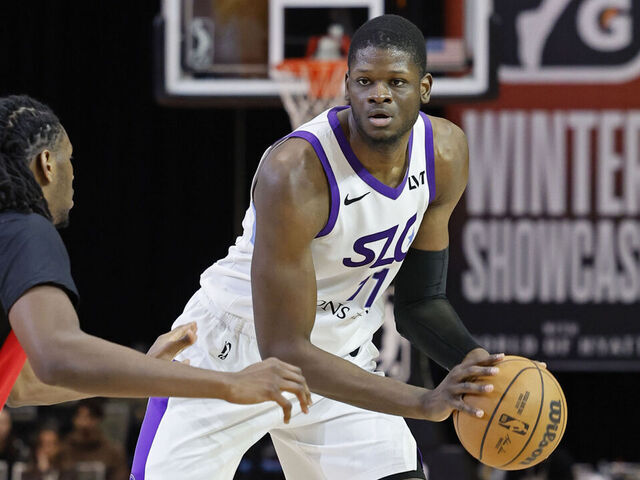
Mo Bamba — Salt Lake City Stars
Age: 27
Current NBA Status: Unrestricted Free Agent
Mo Bamba’s rights have been with the Salt Lake City Stars and he most recently cycled through a brief Raptors NBA call-up before returning to the G League.
Bamba entered professional basketball as one of the most physically intriguing bigs of his class, a 7-footer with mobility, length, and an inherently modern build. His path since being drafted sixth overall in 2018 has been uneven at the NBA level, but his play this season in Salt Lake City suggests he SHOULD be back in the NBA.
Bamba has showcased his combination of size and functional offensive efficiency that is rare to find in the G League. Averaging around 16.5 points and 11.9 rebounds per game, he has proved himself capable of finishing inside and converting on perimeter jumpers at a respectable clip, including on above-average three-point attempts. This blend of rim play and spacing gives him legitimate utility in a modern big role, especially when he’s engaged and aggressive.
Defensively, Bamba’s impact this season has been positive, and his presence clearly matters. His +4.0 defensive differential (DDiff) reinforces that his team defends better with him on the floor. That doesn’t complete the picture by itself, but it aligns with what we saw in the 2025 G-League Showcase. Bamba is a mobile rim protector who can still move laterally and challenge shots.
Bamba’s G League performance this season is a reminder that production and efficiency can coexist with a unique physical profile, even when the NBA stops have been elusive. While his NBA tenure has included multiple stops, waivers, and brief contracts, his sustained play with Salt Lake City this year suggests that, if he continues to refine decision-making and defensive consistency, he remains a prospect with meaningful two-way upside at higher levels.
Sean East II — Salt Lake City Stars
Age: 26
Current NBA Status: Unrestricted Free Agent
Sean East II has become one of the most intriguing backcourt prospects in the G League this season thanks to a productive blend of scoring, playmaking, and, importantly, efficiency. The 6’3” guard has grown into an offensive initiator who knows how to manage possessions without forcing low-percentage actions. Over his time with Salt Lake City this season, East has shown the ability to score, distribute, and make clean decisions within the flow of the offense.
Offensively, East’s is converting a high percentage from the floor (52% FG) and has shot extremely well from three (38.7% 3-pt. fg), allowing him to space the floor. Whether facilitating for others or creating his own shot in rhythm, East consistently stays within the architecture of his team’s offensive plans rather than trying to manufacture volume.
Defensively, East has proven himself to be more than a one-way player. His Defensive Differential (DDiff: +3.9) reflects a guard who contributes meaningfully to team defense without sacrificing his offensive role.
East’s path isn’t a straight line. After going undrafted in 2024, he has spanned multiple competitive environments, including significant production overseas (Romania) and in Canada before returning to the G League. He was a key cog in the Salt Lake City Stars winning the Showcase Championship. His ability to stay efficient in multiple roles and deliver quality minutes on both ends of the floor makes him a prospect worth following as teams continue to seek reliable, two-way guard play.
L.J. Figueroa —Mexico City Capitanes.
Age: 27
Current NBA status: Unrestricted Free Agent.
L.J. Figueroa continues to profile as a dependable wing whose value comes from doing multiple things well without needing to dominate the ball. Listed at 6’6”, Figueroa plays bigger than his height thanks in part to a reported wingspan approaching seven feet, which shows up on tape in his ability to contest shots, disrupt passing lanes, and finish defensive possessions on the glass. Figueroa is not the same guy you may have seen at St. John's. After a 2022 MCL injury, Figueroa got himself into better physical condition. He is leaner and lighter on his feet these days.
Offensively, Figueroa has become more efficient with experience. He takes shots he can make, finishes plays in transition, and has shown a willingness to space the floor without forcing volume (44% 3-pt.fg). His perimeter shooting has improved over time with his numbers rising for three straight seasons now. When left open he’s capable of punishing defenses. Just as importantly, he doesn’t stall the offense, he moves the ball, cuts with purpose, and keeps possessions flowing.
Defensively, Figueroa’s impact has been consistently positive (DDiff: +4.2). He plays strong positional defense, he is competitive as a rebounder. He has the length to challenge without fouling. He understands team concepts and rarely puts teammates in peril because he gambled.
Figueroa’s professional path reflects adaptability and role acceptance. He has logged meaningful minutes across multiple G League stops and remained productive without needing offensive prioritization. As a wing who defends, rebounds, and plays efficiently within structure, Figueroa fits the profile of a prospect whose game translates because it doesn’t rely on any single skill to survive.
DaRon Holmes — Grand Rapids Gold
Age: 23
Current NBA status: Under Contract (Denver Nuggets)DaRon Holmes continues to look like a modern forward whose game will one day benefit the Nuggets. At 6’10” with mobility and touch, he brings a combination of size and skill that allows him to function both as a finisher and a spacer without demanding offensive priority. He is an outstanding passer and decision maker with a 2.62-to-1 assist-to-turnover ratio.
Offensively, Holmes has been efficient and disciplined (50.8% FG, 39% 3-pt. FG, 87.3% FT). He finishes plays around the rim, converts when defenses collapse, and has shown legitimate perimeter shooting this season, keeping defenses honest without drifting into low-value attempts.
Defensively, Holmes has held up. His (DDiff: +2.7) indicates that his teams have defended better with him on the floor, reinforcing that he is not giving back value on that end. He may not be a defensive anchor, but he is reliable and engaged.
Holmes’ 2025–26 season also has to be understood through the lens of recovery. After suffering a season-ending torn Achilles tendon in his Summer League debut in July 2024, Holmes missed the entire 2024–25 NBA season while rehabbing from surgery. He returned to action during the 2025 Summer League and then spent extended time with Grand Rapids as part of a deliberate development track. Considering the severity of the injury, Holmes’ ability to reestablish functional impact, rather than simply reappear, reinforces why his game still projects as translatable moving forward.
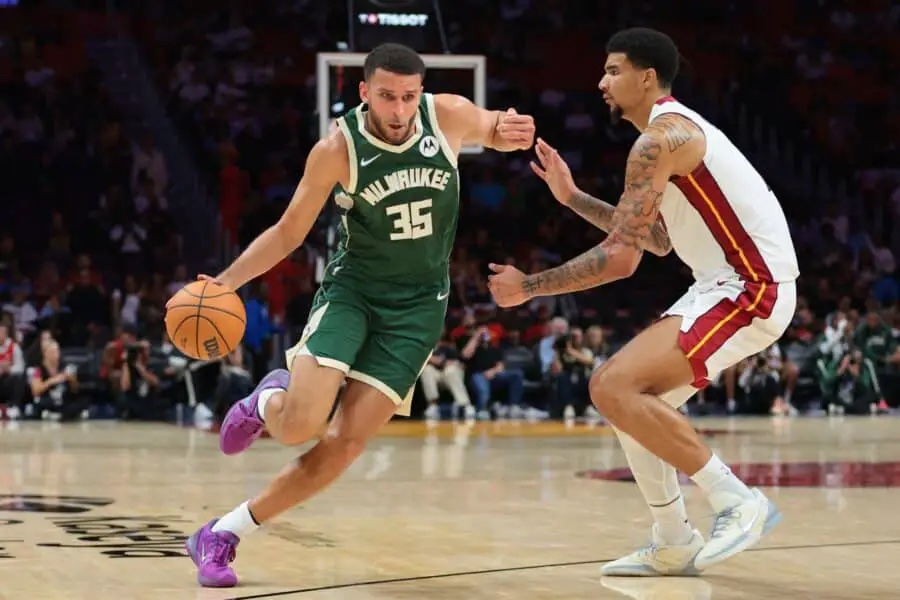
Pete Nance — Wisconsin Herd
Age: 25
Current NBA status: Two-Way Contract (Milwaukee Bucks)
Accurate shooting can cure a multitude of basketball ills. Pete Nance brings size and spacing to the forward position with a skill set that translates to the NBA. At 6’9”, he has the length to stretch the floor and the mobility to function without needing isolation opportunities. That blend has allowed him to play efficiently within his role rather than forcing usage.
Offensively, Nance has been a standout in efficiency metrics this season. In his G League work with the Wisconsin Herd, he’s averaging 21.0 points and 8.0 rebounds per game while shooting 51.7% from the field, 40.0% from three, and 85.7% from the free-throw line! His perimeter shooting keeps defenses honest, allowing him to carve out space inside and capitalize on closeouts with high-value looks.
Defensively, Nance has held his own within team concepts. His DDiff is +2.7. Nance’s two-way status with the Bucks reflects how his game has matured into a functional complementary profile: a forward who stretches the floor efficiently, rebounds at a high clip, and holds up on the other end without needing protection. His skill set aligns with “team ball.”
He can play a role where efficiency and fit outweigh volume or creation, and his continued growth in those areas makes him a compelling player to consider.
Tristen Newton — Rio Grande Valley Vipers
Age: 24
Current NBA status: Two-Way Contract (Houston Rockets)
Tristen Newton has developed into one of the most productive and reliable guards in the G League, combining scoring, playmaking, and physicality in a way that translates possession to possession. He’s comfortable operating with the ball in his hands, but he also understands how to function without monopolizing offense. His game has matured into something sturdy rather than flashy.
Offensively, Newton has been highly effective this season. Across his G League appearances, he’s averaging 26.4 points per game while shooting 49.2% from the field, 37.1% from three, and 85.1% from the free-throw line. Those efficiency markers matter, especially given his usage. He scores at multiple levels, finishes through contact, and consistently creates quality looks for teammates, averaging 6.7 assists per game without drifting into reckless decision-making.
Defensively, Newton has a DDiff: of +2.3, which indicates that his team has defended better with him on the floor. He rebounds well for a guard, competes at the point of attack, and doesn’t shy away from contact. While defense isn’t the defining feature of his profile, it is clearly not a liability.
Newton’s trajectory reflects a guard who has steadily added layers to his game. The combination of scoring efficiency, playmaking responsibility, and defensive competitiveness validates his two-way deal with Houston.
Skal Labissiere — Capital City Go-Go
Age: 29
Current NBA status: Unrestricted free-agent.
Skal Labissiere has quietly re-established himself as a dependable, two-way power forward whose game now looks far more complete than earlier versions suggested. At 6’10” with length and touch, Labissiere no longer plays like a developmental upside bet. Instead, he operates as a poised, efficient contributor who understands spacing, timing, and defensive responsibility.
Offensively, Labissiere has been both productive and efficient. This season, he’s averaging 20.1 points per game while shooting 58.0% from the field and an excellent 46.8% from three-point range on real volume. Those shooting numbers matter because they reflect shot quality rather than opportunism. He scores within the flow, stretches the floor legitimately, and finishes when defenders close out too aggressively. His offensive game no longer stalls possessions or leans on difficult attempts.
Labissiere shows improved awareness as a help defender, better discipline contesting without fouling, and a willingness to rebound in traffic. He may not be a defensive anchor, but he is clearly no longer a concession on that end.
Labissiere’s career is instructive. Once viewed almost entirely through the lens of projection, his current version is grounded in efficiency, role clarity, and reliability. The combination of shooting, size, and defensive engagement makes him far more viable than his reputation might suggest. At this stage, Labissiere looks like a forward whose value is rooted not in upside, but in how cleanly his game now fits real basketball contexts.
Tyrese Samuel — Valley Suns
Age: 25
Current NBA Status: Unrestricted Free Agent
Classification: LPS (Low-Percentage Shooter)Tyrese Samuel is a physical, interior-oriented forward whose value is grounded in strength, activity, and defensive engagement. He plays with a clear understanding of role, embracing the dirty work that keeps lineups functional. As a low percentage three-point shooter, Samuel’s path to staying on the floor depends on impact elsewhere, and this season, he has consistently delivered it.
Offensively, Samuel scores efficiently by living in his lanes. During the 2025–26 season with Valley, he averages 8.5 points per game while shooting over 62% from the field, converting through contact and finishing plays around the rim. His three-point shooting remains limited, but he does not force attempts, and his shot profile stays aligned with what he does best. He also contributes on the glass, averaging nearly seven rebounds per game, extending possessions and creating second chances.
Defensively, Samuel’s impact has been substantial. His Defensive Differential (DDiff: +5.1) offers proof. Samuel competes on every possession, rebounds in traffic, absorbs contact, and holds his ground against bigger players. He’s active as a help defender and doesn’t shy away from physical matchups.
Samuel’s professional profile reflects a player who understands how to survive without a real periemeter shooting game. He defends, rebounds, and plays with force, compensating for his perimeter limitations through effort and reliability.
Ethan Thompson — Noblesville Boom
Age: 26
Current NBA status: Under two-way contract with the Indiana Pacers.Ethan Thompson continues to stand out as a high-usage guard who has learned how to balance volume with efficiency. At 6’5”, he brings good size for the position and plays with a steady, controlled pace that allows him to shoulder offensive responsibility without dictating every possession. His game is built on repeatable actions rather than flash.
Offensively, Thompson’s G League résumé is substantial. This season, he averages over 27 points per game, shooting 46.9% from the field and 43.2% from three. Those numbers reflect improved shot discipline and confidence as a perimeter shooter. He’s comfortable creating late in the clock, but he’s also shown growth as a passer, making simple reads when defenses load up.
Defensively, Thompson has been serviceable within role. He competes, uses his size to avoid being overpowered, and generally avoids becoming a defensive pressure point. His two-way status with Indiana reflects how his game has settled into something functional and dependable. He scores efficiently, spaces the floor, and can handle real usage without collapsing team structure.
Drew Timme — South Bay Lakers
Age: 25
Current NBA status: Two-Way Contract (Los Angeles Lakers)
Classification: LPS (Low-Percentage Shooter)
Drew Timme remains one of the most skilled interior scorers in the G League, and his offensive identity has never been in question. He plays with poise, footwork, and touch near the basket that consistently leads to efficient production.
Offensively, Timme has continued to produce at a high level. In his G League action, he averages over 20 points per game, shooting better than 52% from the field, with the vast majority of his attempts coming inside the arc. He scores through craft rather than power, using angles, timing, and touch to finish against size. He’s also a capable passer out of the post, routinely finding cutters and shooters when defenses commit extra attention. His current assist-to-turnover ratio is better than 2-to-1.
Timme is not a rim deterrent. He does compete, position himself well, communicate, and finish possessions with rebounds. His profile is best understood through role clarity. He does not stretch the floor. Instead, he provides reliable interior scoring, strong feel, and enough defensive competitiveness to remain playable. As an LPS forward who consistently converts high-value looks and holds his own defensively, Timme continues to give himself a chance. He just HAS to convert more three-point shots to have a chance in the NBA.
DeAndre Williams — Delaware Blue Coats
Age: 29
Current NBA status: Unrestricted Free Agent
DeAndre Williams has been one of the most dependable forwards in the G League this season, providing physicality, efficiency, and two-way stability. At 6’6” with strength and balance, he consistently plays bigger than his height, holding his ground inside while remaining mobile enough to function in modern lineups.
Offensively, Williams has been efficient and decisive. During the 2025–26 season with Delaware, he averages 15.5 points per game, shooting an outstanding 63.8% from the field. His scoring comes almost entirely from cuts, rolls, and opportunistic mid-paint touches. He does not rely on perimeter shooting, but he also does not force offense.
Williams’ impact extends beyond scoring. He averaged 6.2 rebounds per game and contributed as a passer, posting nearly two assists per game, often making the extra read rather than stopping the ball. His physical presence creates advantages that don’t always show up in traditional box scores, particularly when absorbing contact and freeing teammates.
Defensively, Williams has been a consistent positive. He competes, rebounds his area, and understands team concepts, particularly as a help defender. While he’s not a rim protector, he is reliable, engaged, and rarely out of position.
Williams’ profile reflects a veteran forward who understands how to help teams win possessions. He brings strength, efficiency, and defensive reliability without demanding touches.
Final thought
The G League has changed over the years, in name, structure, and visibility, but the fundamentals of evaluation have not. Players who defend, play efficiently, and understand their role continue to find paths forward. Hoop Obsession has been tracking that evolution for well over a decade, dating back to the league’s early days, when developmental assignments were still viewed skeptically. This report is not about being right in hindsight; it’s about maintaining a consistent lens and letting the work compound over time.